

Everyone talks about crime, traffic, and the high desert heat—but what sticks with me are the smaller frustrations people in Palmdale live with every day. These are the things that wear on you, that make you question whether your needs are being heard, not during election season, but just in regular Tuesdays.
Broken sidewalks, unreliable transit, uneven safety
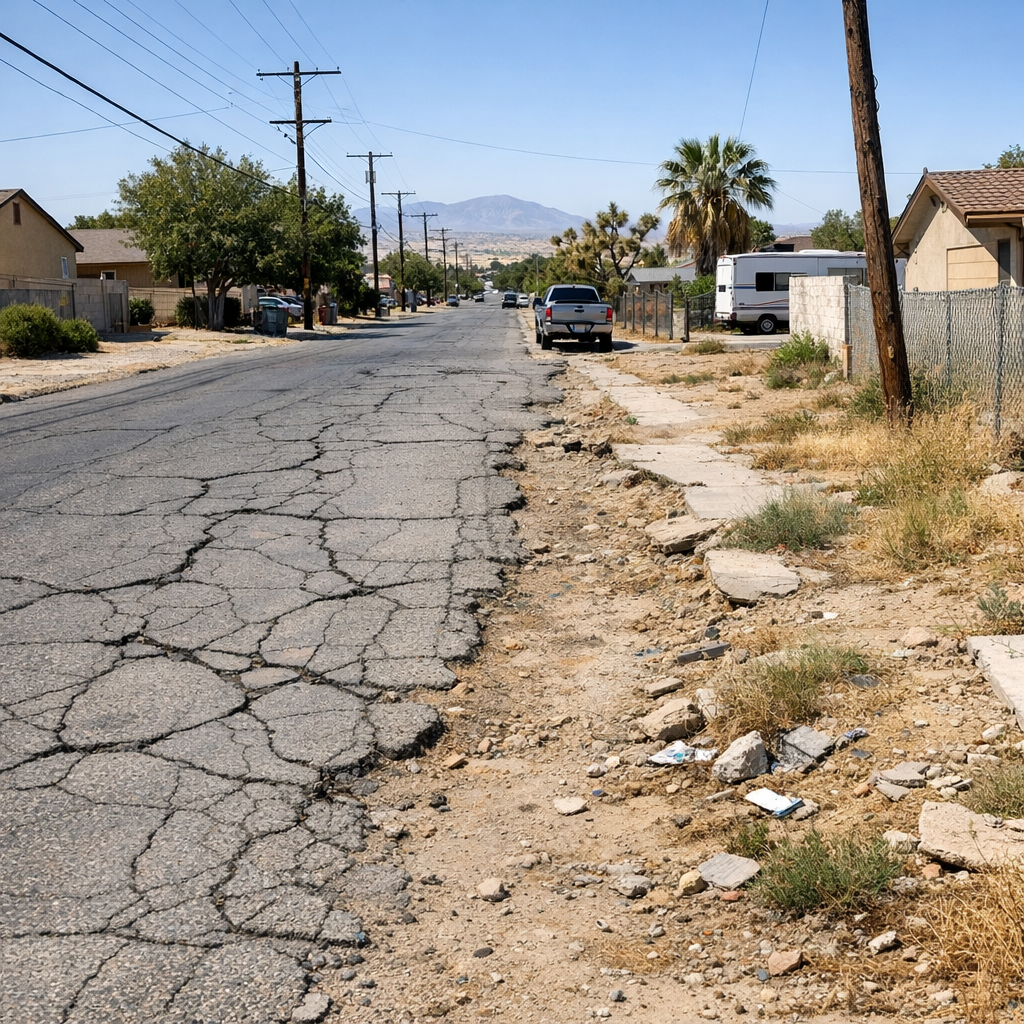
On walks through the city, I notice gaps in sidewalks where there used to be none. East Palmdale often has large stretches where safe, continuous sidewalks are missing altogether—forcing folks onto busy roads or uneven shoulders. It’s not just inconvenient; it’s dangerous, especially for families, pedestrians, and folks with mobility needs.
Transit is another sore spot. Some bus routes run every 30 to 60 minutes—fine if you’re not in a rush, impossible when you are. That’s especially hard for people who rely on public transit for work, school, or appointments. These delays chip away at opportunities.
On safety, I hear about differences between neighborhoods. Many say West Palmdale feels more secure—schools supposedly safer, streets quieter—while Eastside problems like graffiti, loitering, and public drug use are raised over and over. It’s a divide that amplifies frustration.
High housing costs, overcrowded schools, and slowed promise
Housing here used to be the dream: affordable, with room to grow. Now, rent for a small apartment can eat up half a young person’s income. Many recent grads or folks trying to move out of their childhood homes tell me they feel stuck—even when they’ve worked hard.
I’ve talked with parents who worry about schools too. Many high schools top 3,000 students. Portable classrooms, stretched resources, and large student–teacher ratios are a frequent theme. People want smaller class sizes, more support, more opportunities for their children—yet these always seem just out of reach.
Broken promises? The trust gap between residents and decisions
There’s a recurring feeling that City Hall or regional plans promise a lot: a new road, a convention center, improved air quality. But year after year, certain areas—especially in central and east Palmdale—say they see few of those benefits. It’s the ordinary services, the upkeep, the fertilizing of parks, fixing of pot holes—these are what build trust.
People want consistent investment across all neighborhoods. Not only in grand infrastructure, but in lighting, sidewalks, youth programs, and daily responsiveness. The stories I hear paint a picture of unmet expectations and a yearning for real attention.
Why these small issues matter
- They affect health: Poor sidewalks or lack of safe walkways limit mobility and isolate people.
- They limit opportunity: When transit is unreliable or distant, it’s harder to attend work or classes.
- They erode community spirit: Seeing neglected public space or broken infrastructure sends the message that someone doesn’t care.
What might help move the needle
First, I believe in stronger local participation—town hall meetings that actually travel through districts, not just downtown, so people from every side of Palmdale can speak without driving 20 miles or more.
Next, transparent prioritization: let’s see the scores and status of neighborhood issues. Which sidewalks get fixed, when and why? Which transit routes are slated for improvement? Make that public.
Finally, accountability in funding: if tax dollars are collected citywide, there should be visible evidence that all parts of the city reap benefits—not just the neighborhoods with more influence or newer developments.
Palmdale doesn’t need grand gestures all the time. What we need are basics done well—and done equitably. Because fairness in the ordinary builds trust, safety, and pride more than anything flashy ever could.